Home › Asphalt Pathways, Sidewalks, and Trails
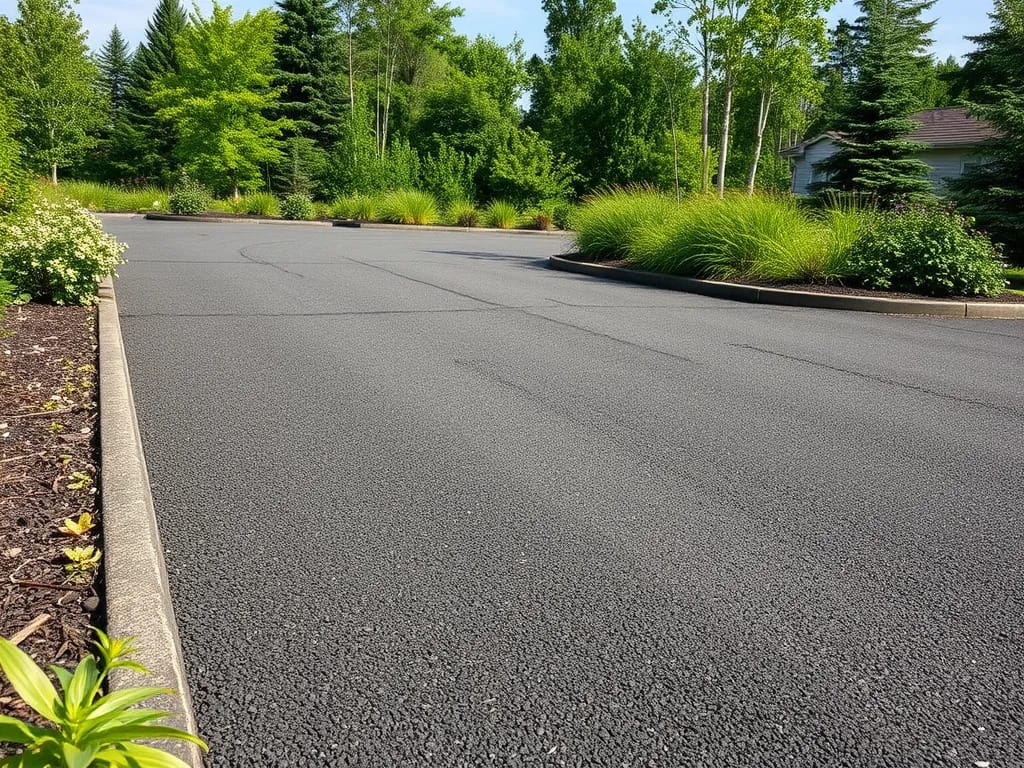
Create accessible routes with asphalt pathway paving in Manchester, NH. We build sidewalks, walking paths, and multi use trails for campuses, parks, and communities so pedestrians and cyclists enjoy smooth, safe surfaces.
Precision Asphalt Manchester provides professional asphalt pathway paving throughout Manchester, NH, NH and the surrounding area. Our licensed, insured crew delivers safe, clean, on-time work with a free estimate before anything begins. Call (603) 633-5822 or request your free quote.
Durable Asphalt Pathways, Sidewalks, and Trails in Manchester, NH
Precision Asphalt Manchester designs and builds asphalt pathways, sidewalks, and multi‑use trails that hold up to New Hampshire weather and everyday foot traffic. We focus on how the path will actually be used: neighborhood walking routes, school and park walkways, HOA paths around ponds, and connector trails between parking lots and building entrances.
In Manchester, freeze‑thaw cycles, road salt, and plow work are hard on pavement. Our approach to asphalt pathway paving accounts for these local conditions from the start. We look at drainage patterns, nearby curb lines, and where snow tends to pile up so your new walkways do not heave, crack, or turn into icy ponds in February.
Whether you need a short ADA‑compliant sidewalk from your office lot to the main door or a winding path across a multi‑building property, every project starts with a site visit. We measure grades, locate existing utilities, and talk through how your visitors actually move through the space so the final layout feels natural and safe.
Planning and Design: Layout, Width, and ADA Compliance
Good pathway design in Manchester is about more than drawing a straight line on a plan. At Precision Asphalt Manchester we look at the slope, soil, sun exposure, and how maintenance crews will access the area.
For sidewalks and building approaches, we typically recommend widths between 4 and 6 feet, depending on traffic volume and ADA requirements. Multi‑use asphalt trails that may see bikes, strollers, and joggers often benefit from 8 to 10 feet of width. We also plan passing zones and gentle curves so visibility is clear in winter when snowbanks are high.
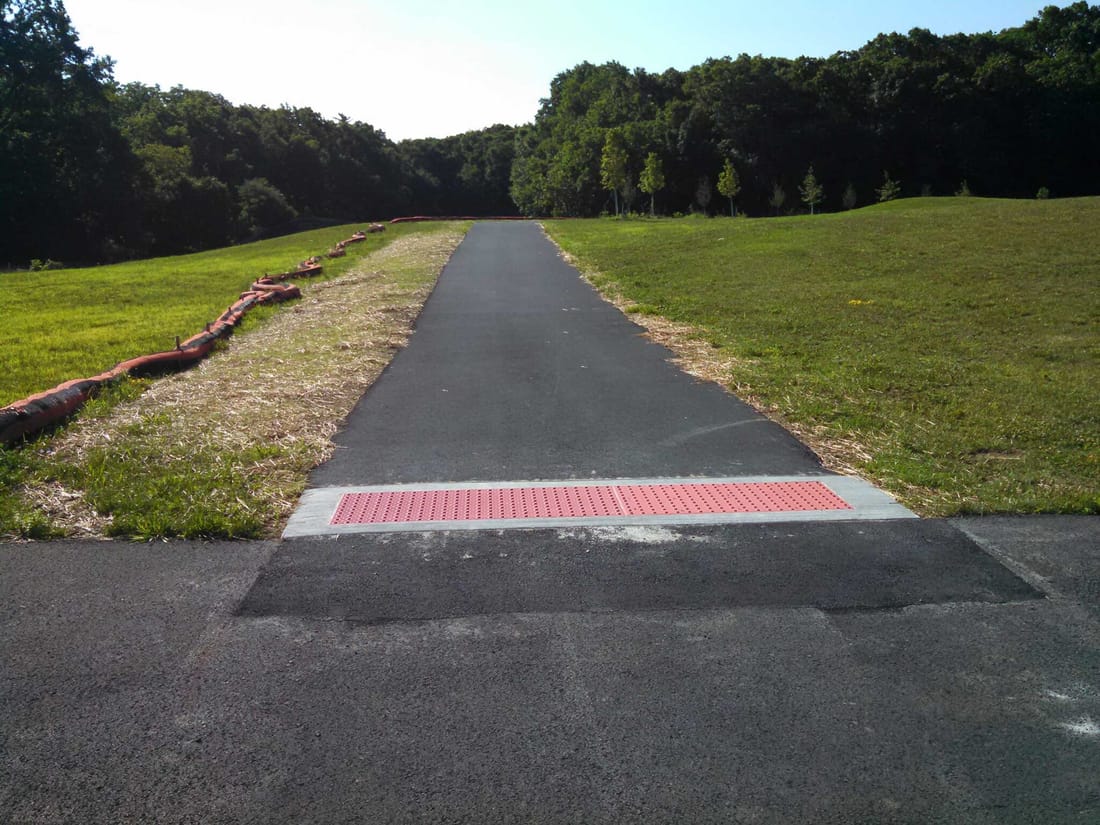
Accessibility is built in from the start. We design slopes to meet ADA standards, add tactile detectable warning panels at street crossings when required, and plan transitions from parking lots to walks so there are no trip lips at the edges. At commercial entrances in downtown Manchester, we consider where ice melt products will be used and make sure grades allow water to run away from doors instead of toward them.
During planning, we discuss edge treatments. Some clients prefer a clean asphalt edge into lawn, which is cost‑effective but easier to damage with plows. Others choose vertical or sloped granite curbing, especially near streets, or poured concrete borders to help contain mulch beds. These decisions are made before we mobilize so the installation goes smoothly.
Site Preparation and Excavation for Long‑Lasting Walkways
Most problems with asphalt pathways in New Hampshire start below the surface. That is why Precision Asphalt Manchester spends significant time on subgrade preparation before we place any pavement.
We begin by stripping sod, roots, and organic topsoil along the planned path footprint, typically 6 to 12 inches beyond the final paved width to allow room for forms and compaction equipment. Depth of excavation depends on expected use and soil conditions. A light foot‑traffic garden path on well‑drained gravelly soil may need 6 to 8 inches of total structure, while a commercial sidewalk that will see delivery carts or the weight of small maintenance vehicles might need 10 to 12 inches.
Manchester properties often have a mix of fill and native glacial soils. Where we find soft spots or saturated material, we undercut those areas and replace them with compacted crushed stone. In some locations, especially near the Merrimack River or low areas in Goffstown and Hooksett border neighborhoods, we may recommend a geotextile separation fabric to keep fines from pumping up into the base over time.
Once unsuitable material is removed, we shape and compact the subgrade using plate compactors or rollers, and we check slopes with laser or string line to be sure water will not pond on the finished surface. Proper preparation here is what keeps pathways from settling unevenly after a tough winter.
Base Stone Installation, Drainage, and Asphalt Mix Choices
A well‑built base is the backbone of a stable asphalt pathway. Precision Asphalt Manchester typically installs 4 to 8 inches of crushed stone base, such as 3/4 inch processed gravel, compacted in lifts. For surfaces that will see light vehicle access, such as maintenance carts on a campus trail, we may increase base thickness or upgrade to a denser graded aggregate.
Drainage is handled during this stage. In areas where snowmelt and rain naturally collect, we pitch the base slightly to one side and may install small swales or underdrains. For example, along wooded trails in the North End or near Reservoir Park, we often design gentle cross‑slopes that move water off the path into adjacent ground so the surface dries faster and is less prone to black ice.
For the asphalt itself, we select mixes that perform well in New England climates. For walks and trails we commonly use a fine‑graded top course, usually in the 3/8 inch nominal size range, to create a smoother, more comfortable surface for pedestrians, joggers, and wheelchairs. In some cases we install a two‑layer system: a base course for strength and a thinner surface course for finish and smoothness.
We also discuss finish texture with clients. A slightly textured surface can provide better traction in icy months, which can be especially important on slopes or near parking lots where meltwater can refreeze overnight. All decisions on mix type and thickness are documented so future repairs or tie‑ins can match the original work.
Installation Process and Seasonal Timing in Manchester
With the base prepared, Precision Asphalt Manchester schedules asphalt pathway paving for conditions that will produce a strong bond and smooth finish. In our climate, primary paving season typically runs from late April through early November, depending on temperatures and overnight lows.
We monitor weather closely because asphalt placed on a cold or saturated base is more likely to ravel or develop weak joints. For most pathway work we target daytime surface temperatures of at least 50 degrees and dry conditions. In spring, we also watch for frost still lurking in shaded areas and will delay those sections if needed so the ground has fully thawed.
During installation, we use small pavers or hand‑lay methods depending on access. Tight courtyard paths or routes behind buildings may require wheelbarrow or skid‑steer delivery of mix, while longer, straighter stretches in parks or along roadways benefit from a mechanical paver to achieve uniform thickness. Joints between loads and at tie‑ins to existing pavement are carefully lute‑raked and compacted so they do not become weak points.
Compaction is done with steel drum rollers and plate compactors, paying special attention to edges. Properly compacted edges resist crumbling when lawn crews trim or when plows push snow over the walkway in winter. Once rolled, we restrict traffic until the surface has cooled and set, usually just a few hours for pedestrian use in normal weather.
Costs, Common Issues, and How We Prevent Problems
The cost of asphalt pathway paving in Manchester depends on several specific factors: total length and width, excavation depth, base thickness, accessibility for equipment, and whether the route requires hand work or can be machine paved. Features like granite curbing, ADA ramps, or lighting conduits also affect pricing.
At Precision Asphalt Manchester we walk clients through these cost drivers during the estimate, often providing options such as varying base thickness in different sections or adjusting alignment to avoid expensive tree removal or retaining walls.
Common issues we see on older paths include edge cracking from insufficient base width, birdbaths where water ponds because slopes were not set correctly, and frost heave at transitions between asphalt walks and concrete steps. To prevent these problems, we extend the base at least 6 inches beyond each side of the asphalt, take time to fine‑grade for positive drainage, and pay close attention to how new work will move relative to existing structures through the seasons.
Another Manchester‑specific concern is damage from winter maintenance. Plows and snow blowers can scar or lift weak edges. When we know a path will be machine cleared, we may recommend thicker pavement, protective curbing, or simple layout changes that give operators more room to work without riding up onto lawns or into landscaped beds.
We also explain realistic maintenance expectations. While asphalt walkways are low‑maintenance, sealing small cracks before winter and avoiding heavy vehicles on paths designed only for foot traffic will significantly extend service life.
Maintenance, Repairs, and When to Resurface Your Pathways
After installation, a modest maintenance plan keeps your asphalt pathways and sidewalks in good condition for many years. Precision Asphalt Manchester typically recommends a first inspection within 2 to 3 years, then on a regular schedule after major winters.
Minor cracks can be cleaned and filled to keep water out of the structure. This is especially important in Manchester, where repeated freezing and thawing can quickly turn a hairline crack into a broken segment. We also repair local depressions by saw‑cutting, removing failed material, re‑compacting base if needed, and installing new asphalt flush with the surrounding surface.
For systems of paths across commercial campuses, condo associations, or municipal parks, we can develop a phased maintenance plan. Lighter‑use sections might be left as‑is while high‑traffic stretches near entrances or parking lots are prioritized for sealcoating or overlay.
When overall wear, wide cracking, or extensive patching begins to affect appearance or safety, resurfacing becomes the better long‑term solution. This can mean milling down the top layer and installing a new surface course, or in some cases full reconstruction where base support has been lost. We help property managers in Manchester choose the right approach so budgets are used efficiently and pathways stay safe and attractive.