Home › Industrial and Heavy-Duty Asphalt Paving
Handle heavy traffic with industrial asphalt paving in Manchester, NH. We design and install reinforced asphalt sections for truck yards, loading docks, and equipment areas so your pavement resists rutting, shoving, and premature failure.
Precision Asphalt Manchester provides professional industrial asphalt paving throughout Manchester, NH, NH and the surrounding area. Our licensed, insured crew delivers safe, clean, on-time work with a free estimate before anything begins. Call (603) 633-5822 or request your free quote.
Industrial Asphalt Paving for Manchester’s Heaviest Use Sites
Industrial asphalt paving is different from paving a driveway or a small parking lot. At Precision Asphalt Manchester, we design and install pavements that handle constant truck traffic, forklifts, loaded trailers, and freeze-thaw cycles across Manchester and the surrounding Merrimack Valley. Our work is tailored for distribution centers, manufacturing facilities, loading docks, trucking yards, recycling plants, and municipal or utility compounds.
The pavement structure is what keeps your yard or loading area from rutting and breaking apart under heavy loads. Instead of a thin asphalt layer over native soil, industrial sections often need thicker stone bases, engineered drainage, and asphalt mixes designed for high loads. We look at how your site is actually used, where the trailers sit, how the plows move, and what kind of weight is on each lane. Then we design the pavement to match that reality so you are not repaving every few years.
Manchester properties deal with salt, sand, and plow blades all winter, plus strong sun and occasional flooding in spring. Those local conditions shape every recommendation we make, from asphalt thickness to joint locations. Our goal is a surface that stays smooth and safe, with minimal shutdowns for repairs and a life cycle that makes sense for your operations and budget.
How We Design a Heavy-Duty Pavement for Your Site
Effective industrial asphalt paving starts long before the roller touches the surface. Precision Asphalt Manchester begins with a site walk to understand traffic patterns and loading conditions. We note where tractor trailers turn sharply, where forklifts cross joints, and where standing water typically appears. Many Manchester sites have sections built on filled land or near the river, so we often probe or test the subgrade to see how strong and stable it is.
From there we build a pavement design. For light truck areas, we might specify a 3 to 4 inch asphalt section over an 8 to 10 inch gravel base. For heavy industrial lanes or loading docks where trucks are parked for long periods, we commonly use 5 to 6 inches of industrial mix asphalt split into two or three lifts over a 12 to 18 inch compacted aggregate base, all adjusted to your soil conditions. We follow New Hampshire DOT and industry standards but adapt them to your specific facility and risk tolerance.
We also plan joints and reinforcement around high stress points. For example, we often thicken the asphalt next to loading dock doors, reinforce dumpster pads, and transition carefully where asphalt meets concrete aprons or interior slabs. These details are what prevent early cracking and edge failures, especially in older Manchester industrial parks where additions have been built in stages over decades.
Installation Steps for Industrial and Heavy-Duty Asphalt Paving
Once we finalize the design, Precision Asphalt Manchester follows a clear, step by step construction process. First we handle excavation and proof rolling. We remove unsuitable materials, shape the subgrade to the planned slopes, then compact and proof roll the area. If the soil pumps or deflects under the roller, we undercut and replace it or stabilize it so the pavement does not settle and rut later.
Next we install the aggregate base. We place crushed gravel in controlled lifts, typically 4 to 6 inches at a time, and compact each layer to specification using vibratory rollers. In industrial yards this step is critical because the base carries most of the structural load. We often add extra attention at trailer parking rows and drive lanes that see the highest axle loads.
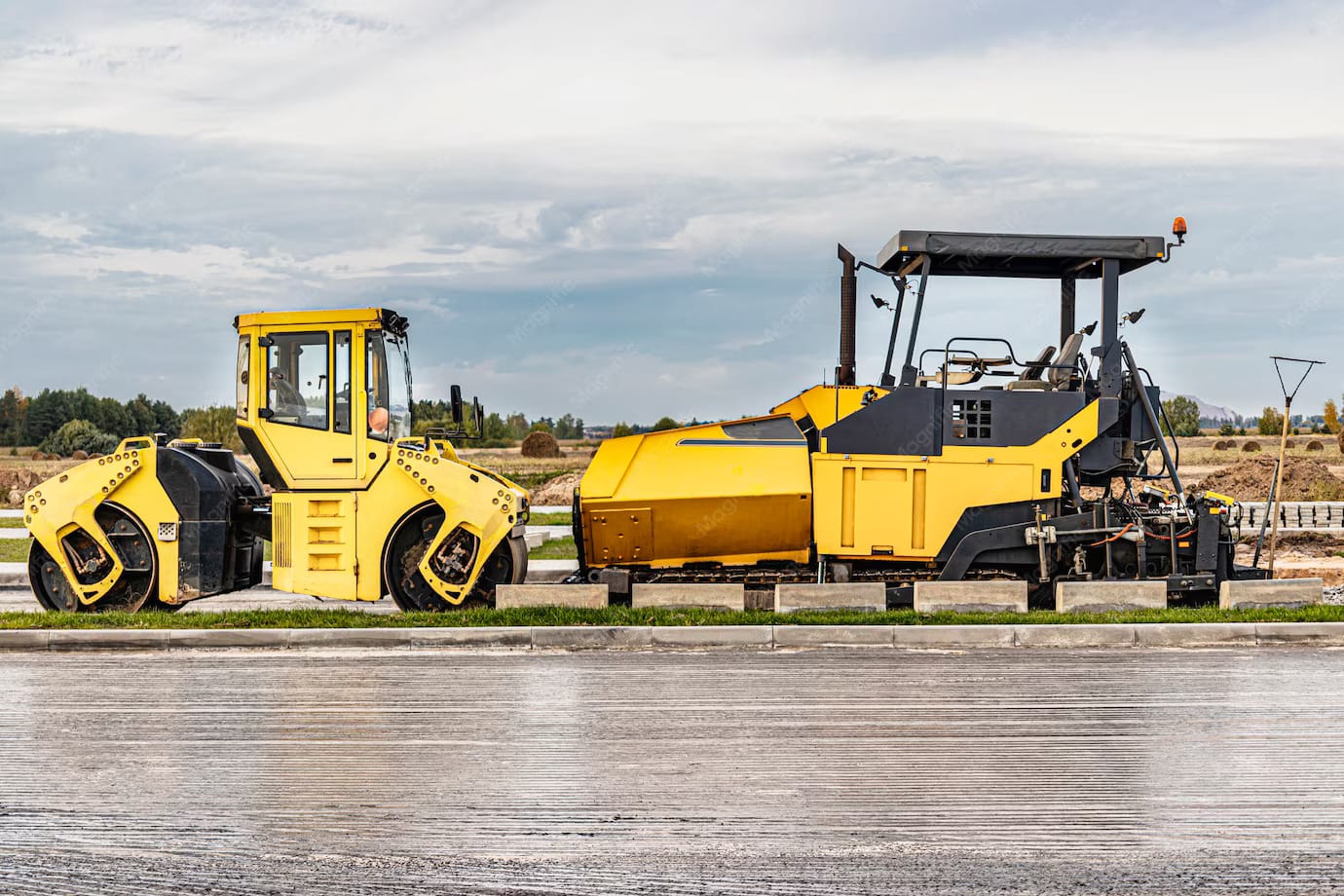
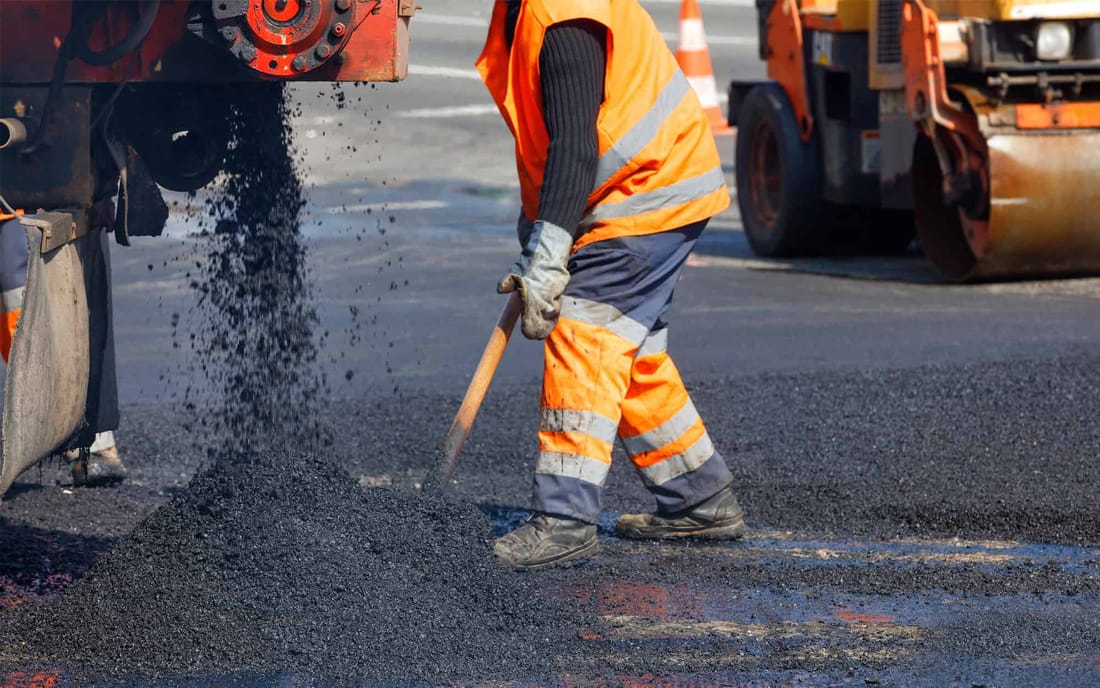
After the base is tested and approved, we place the asphalt in one or more lifts. For heavy-duty sections we usually install a base course with a coarser stone mix for strength, then a surface course with a finer mix for smoothness and durability. Each lift is placed at the correct temperature, matched at seams, and compacted with steel drum and pneumatic rollers to achieve the right density. We check joints, inlets, and transitions so forklifts and plows do not catch on uneven edges.
The final step is line striping and any safety markings or bollard bases your site needs. We coordinate the work to minimize disruption, often phasing the paving so part of your lot remains open. For 24 hour facilities in the Manchester area, we can schedule night or weekend work to keep docks and drive lanes available when you need them most.
Local Conditions That Affect Performance and Cost
Manchester’s climate and soils directly influence both the cost and the long term performance of industrial asphalt paving. Freeze-thaw cycles and winter maintenance practices are the biggest factors. Repeated freezing and thawing can open up small cracks into larger failures, especially where water is allowed to sit. That is why we place a strong emphasis on drainage. Proper slopes, underdrains where needed, and well set catch basins often save more money over time than adding another inch of asphalt.
Salt and sand used on industrial lots can grind the surface and accelerate aging. For heavy-use areas, we recommend mixes with durable aggregates and, in some cases, slightly richer asphalt binder content to resist raveling. We also consider your plowing equipment. If you use steel cutting edges on plow blades in tight loading areas, we will talk about joint locations and potential use of concrete in the highest abuse spots.
Cost is driven by several main factors: site preparation and undercutting, required base thickness, asphalt thickness and mix type, drainage upgrades, and how complicated it is to keep your facility operating during construction. Manchester sites with soft or wet subgrades often require deeper excavation and gravel, which increases cost up front but dramatically reduces the chance of alligator cracking and potholes later. We are transparent about where your dollars make the most difference so you can choose between minimum acceptable sections and more robust, long life designs.
Common Problems We Solve in Existing Industrial Pavements
Many calls to Precision Asphalt Manchester start with a specific problem section, not a full site rebuild. Common issues include rutted truck lanes, broken pavement at dock doors, standing water near loading areas, and surfaces that crank or heave after winter. Rather than automatically recommending complete replacement, we first determine what is causing the failure.
If rutting is confined to a few truck lanes but the rest of the yard is sound, we can mill out those lanes, strengthen the base, and repave with a thicker industrial mix. For failed dock approaches, we might remove and reconstruct a concrete or asphalt apron, then tie back into the surrounding pavement with sawcut joints and thicker asphalt around the dock face.
Poor drainage is a recurring problem in older Manchester industrial parks, where new buildings and additions have changed runoff patterns. In those cases, we might regrade localized areas, reset or replace catch basins, or add new structures and tie them into existing drainage systems. Sometimes a simple correction like cutting relief swales or adjusting a few structures can prevent recurring ice patches and ponding.
We also address surface oxidation and early cracking through milling and overlay strategies. Where the underlying base is still good, we can mill off the top layer, repair isolated structural failures, and place a new industrial grade surface course. This extends pavement life and avoids a full depth reconstruction, which is often the most cost effective solution for Manchester facilities with moderate to heavy use.
Planning, Phasing, and Safety for Active Industrial Sites
Industrial and heavy-duty asphalt paving must be coordinated around production, deliveries, and employee safety. Precision Asphalt Manchester spends considerable time in planning so your operation keeps moving. We start by mapping entrances, fire lanes, primary truck routes, and employee parking. Then we propose a phasing plan, often breaking the work into zones that can be closed and reopened in sequence.
For busy Manchester facilities, we can schedule high impact work during your slowest periods, nights, or weekends, and we can create temporary access paths using crushed stone or previously completed sections. Clear signage and cones are used to redirect traffic, and we coordinate with your team on when certain docks or entrances will be offline so there are no surprises for drivers or vendors.
Safety is built into every step. We keep work zones separated from employees and forklift paths, maintain clean transitions to active areas, and ensure surfaces have proper traction before they reopen to traffic. At the end of each shift, we stabilize edges, remove trip hazards, and secure the site. When the project is complete, we walk the site with you, review maintenance recommendations such as crack sealing schedules and drainage checks, and leave you with a realistic expectation of how your new industrial pavement should perform in Manchester’s climate.