Home › Road, Street, and Municipal Paving
Rely on experienced crews for road paving in Manchester, NH. We build and resurface city streets, subdivision roads, and municipal projects with proper grading, base depth, and asphalt structure so traffic moves safely and smoothly.
Precision Asphalt Manchester provides professional road paving throughout Manchester, NH, NH and the surrounding area. Our licensed, insured crew delivers safe, clean, on-time work with a free estimate before anything begins. Call (603) 633-5822 or request your free quote.
Road, Street, and Municipal Paving in Manchester, NH
Precision Asphalt Manchester provides road paving services tailored to the specific conditions of Manchester and the surrounding Merrimack Valley. Our crews work on city streets, subdivision roads, access drives, and municipal facilities, coordinating closely with public works departments, engineers, and private developers.
Manchester has freeze-thaw cycles, salt use in winter, and frequent utility cuts. We design and build pavements with these realities in mind. That means proper base construction, correct asphalt mix selection for local traffic loads, and careful attention to drainage so water does not sit under or on top of the pavement. Every project starts with understanding who will use the road, what kind of traffic it will carry, and how long it needs to last before major rehabilitation.
How We Evaluate and Plan a Road Paving Project
For any road paving job in Manchester, Precision Asphalt Manchester begins with a site and pavement assessment. On an existing road, we walk and drive the entire length, documenting cracks, potholes, rutting, manhole settlement, ponding areas, and previous patchwork. We check edge support and look for base failures by probing soft spots and observing movement under truck tires.
We then review the road's use. A quiet residential street requires a different design than a bus route or an industrial park access road. We look at truck percentages, turning movements, and braking zones near stop signs and intersections. These details help us specify asphalt thickness and mix type.
Planning also includes traffic control and staging. In Manchester neighborhoods and downtown streets, full closures are often not practical. We create phased plans that keep at least one lane open when possible. On municipal jobs, we coordinate with the city to meet permit, signage, and detour requirements, and we schedule around school hours or commuter peaks to minimize disruption.
Finally, we evaluate existing drainage. If we see standing water after rain, depressed gutters, or clogged catch basins, we address those in the plan. Ignoring drainage is one of the fastest ways to shorten a road's life in New Hampshire.
Subgrade, Base, and Drainage: The Foundation of Long-Lasting Roads
Road paving quality is determined long before the asphalt is laid. Precision Asphalt Manchester spends significant time on the layers you do not see: subgrade, base, and drainage.
We start by verifying subgrade strength. On reconstruction projects, we strip existing asphalt and unsuitable materials, then compact and proof-roll the subgrade with heavy equipment. Any pumping or flexing shows weak spots that must be undercut and rebuilt with better material. In Manchester, we often encounter clay pockets, buried organic soils, and older fill materials that need to be removed or stabilized.
Next, we build the gravel base. For local streets, this often involves installing and compacting 8 to 12 inches of crushed gravel, placed in lifts and compacted with vibratory rollers. On higher volume or heavier truck routes, we may increase base thickness or use processed gravel with stricter gradation to improve load distribution. We test compaction to ensure the base meets specified density, which directly affects how well the asphalt will perform.
Drainage work includes shaping the road crown so water sheds to the sides, adjusting or replacing catch basin frames and grates, and ensuring swales, ditches, or curb lines will carry water away. In areas prone to winter heaving, we may recommend underdrains or improved roadside ditches so water does not remain trapped under the pavement where it can freeze and expand.
Asphalt Mixes and Paving Methods We Use in Manchester
Not all asphalt is the same. Precision Asphalt Manchester selects specific mix designs based on Manchester's climate and the road's use. For many local streets, we use a dense graded binder course for structure and a finer surface course for smoothness and durability. On bus routes, steep hills, and intersections where vehicles brake and turn, we often specify a stiffer, higher performance mix that resists rutting.
In cold New Hampshire weather, temperature control is critical. We monitor the temperature of the asphalt in the truck, at the paver, and on the mat. If the surface or air temperature drops too low, the asphalt can cool before it is properly compacted, which leads to weak, permeable pavement. We schedule paving windows accordingly and adjust rolling patterns to local conditions.
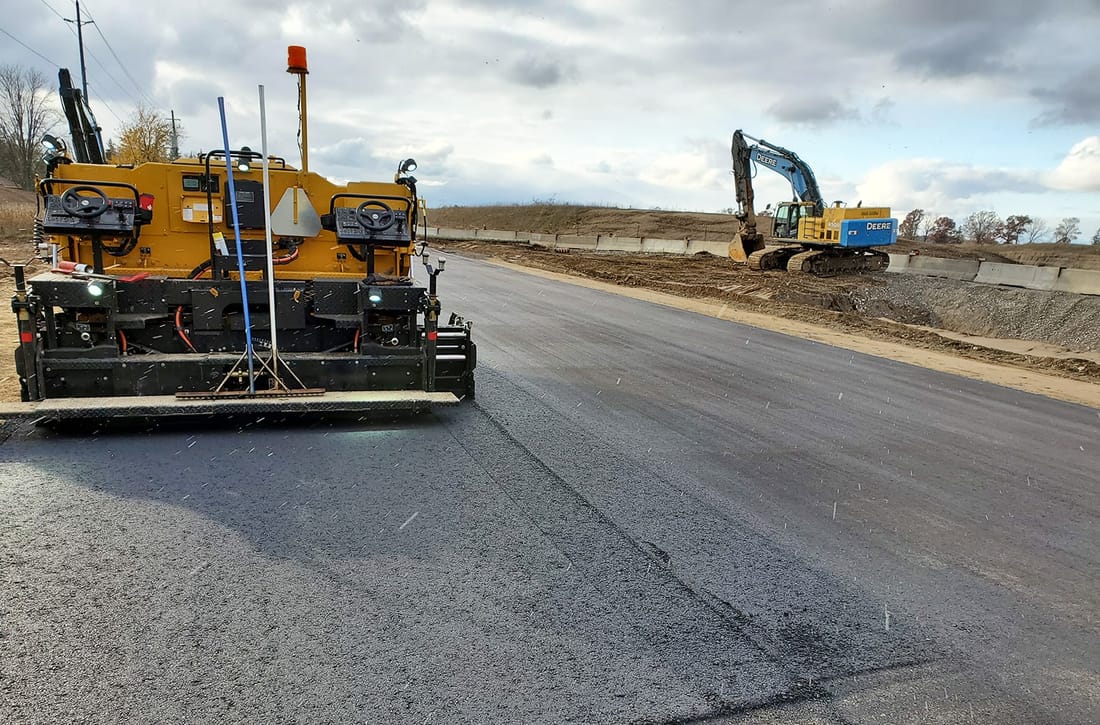
Our crews use pavers with automatic grade and slope control to maintain consistent thickness and proper crown. We pay special attention to longitudinal joints where two paving passes meet. For municipal roads in Manchester, we use specific joint construction techniques, including overlapping, proper rolling sequence, and tack coat at the joint, to reduce future cracking and moisture intrusion.
Compaction is measured with passes of steel drum and pneumatic tired rollers. We adapt rolling patterns to the mix and the site, and we coordinate closely with the asphalt plant to manage truck spacing so the paver can move steadily without stopping, which results in a smoother and longer lasting surface.
Pricing, Bids, and What Drives the Cost of Road Paving
Road paving costs in Manchester depend on more than just square footage. Precision Asphalt Manchester structures bids around several key factors that you should understand before comparing proposals.
Existing condition has a major impact. Mill and overlay on a structurally sound road is far less costly than full depth reclamation or complete reconstruction. If there are widespread base failures, undersized drainage, or subgrade issues, we include the necessary corrective work so the new surface does not fail prematurely.
Thickness and mix design matter too. A residential dead end might perform well with 2.5 to 3 inches of asphalt total, while a collector road carrying school buses and delivery trucks may need 4 to 5 inches or more. Higher performance mixes, required on some municipal specifications, cost more per ton but offer better resistance to cracking and rutting.
Access and traffic control can influence price. Night work in downtown Manchester, paid police details for traffic management, complex detours, or strict work-hour limitations all affect labor and equipment time. Utility coordination is another factor. If there are many manholes, water valves, or gas gates to adjust, additional labor and materials are needed.
When you review bids, look beyond the total number. Ask each contractor to explain base work quantities, asphalt thickness, mix types, traffic control plans, and how they will handle transitions to driveways and intersecting streets. A cheaper proposal that skips necessary base or drainage work will cost more in repairs within a few years.
Common Road Problems in Manchester and How We Address Them
Roads in Manchester face specific issues from winter weather, plowing, and utility activity. Precision Asphalt Manchester builds and rehabilitates pavements with these recurring problems in mind.
Alligator cracking often signals base failure. We do not just crack seal over these areas. Instead, we cut out failed panels, excavate to stable material, rebuild the base, then patch with hot mix asphalt before resurfacing. This prevents reflective cracking in the new layer.
Ruts and shoving at intersections or bus stops usually result from heavy braking and turning combined with insufficient pavement strength. When resurfacing, we may mill deeper in these areas, upgrade the binder mix to a stiffer design, and increase total thickness where trucks sit or turn. This targeted reinforcement avoids overbuilding the entire road.
Edge cracking is common on rural and residential roads where vehicles drive off the pavement. We address this by improving shoulder support, widening slightly where feasible, and ensuring the base extends beyond the edge of the pavement. In some locations, we recommend stabilizing shoulders with processed gravel or asphalt millings so they support occasional traffic without breaking down.
For roads disturbed repeatedly by utilities, we coordinate permanent patches that match or exceed the full pavement structure. We tie those patches into our overlay plan, so joints are staggered and reinforced instead of lined up, which reduces future cracking along trench lines.
What Manchester Municipalities and Developers Can Expect From Us
Precision Asphalt Manchester is familiar with local standards, from City of Manchester construction details to typical New Hampshire DOT guidelines for local roads. We work comfortably within public bid environments as well as negotiated contracts for private roads that will later be accepted by the city.
Our team provides detailed proposals with line items for milling, reclaiming, base installation, pavement thickness by course, drainage structures, and traffic control. For subdivisions, we can coordinate binder course placement early in the project, then return after home construction and heavy truck traffic to place the final surface course. This approach allows the binder course to absorb early damage instead of the finished surface.
Scheduling is built around Manchester's season and municipal constraints. We avoid leaving roads milled for long periods, and when that is unavoidable, we maintain temporary transitions and safe driveability. On school routes, we coordinate with school calendars to reduce disruptions. We also manage communication with residents when temporary driveway or street closures are required.
From small dead-end streets to multi-phase municipal resurfacing programs, our priority is a pavement that performs well in Manchester's climate and traffic conditions, documented clearly enough that public officials, engineers, and residents know exactly what they are getting.