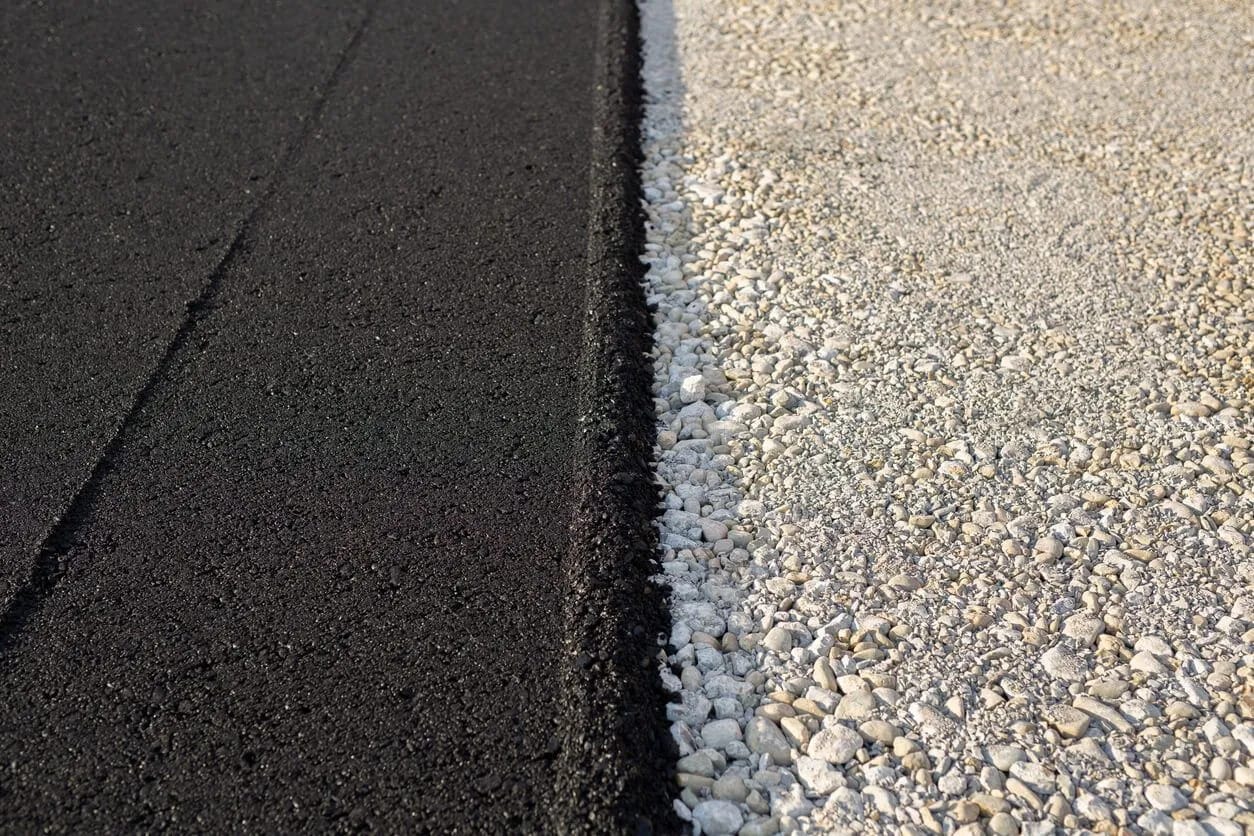
Home › Commercial Gravel-to-Asphalt Conversions
Upgrade rough surfaces with commercial gravel to asphalt conversions in Manchester, NH. We reshape, compact, and pave gravel lots and drives so your customers and trucks enjoy clean, stable pavement instead of ruts and mud.
Precision Asphalt Manchester provides professional commercial gravel to asphalt throughout Manchester, NH, NH and the surrounding area. Our licensed, insured crew delivers safe, clean, on-time work with a free estimate before anything begins. Call (603) 633-5822 or request your free quote.
Turn Your Gravel Lot Into a Durable Commercial Asphalt Surface
If your commercial property in Manchester still has a gravel parking lot or access road, you already know the headaches: rutting after every storm, constant dust, and a rough, unprofessional look. Precision Asphalt Manchester specializes in commercial gravel-to-asphalt conversions that transform those problem areas into smooth, long-lasting asphalt surfaces tailored to New Hampshire’s climate.
We focus specifically on taking existing gravel areas and engineering them to support asphalt. That means we look beyond the surface. Before we quote or design anything, we walk the site with you, check drainage patterns, look at traffic flow, and inspect how the gravel base behaves after rain. In Manchester, where freeze-thaw cycles and plow operations are tough on pavement, a proper conversion is about structure and water management, not just laying blacktop over stone.
Whether you manage a retail plaza near South Willow, an industrial yard off the 293 corridor, or a medical or office facility with heavy daily traffic, we customize the asphalt build so it stands up to your real-world use. Our goal is simple: when the work is done, your new asphalt surface should look professional, drain correctly, and hold up for many winters with routine maintenance only.
How We Convert Existing Gravel to Commercial-Grade Asphalt
Effective gravel-to-asphalt work follows a clear sequence, and skipping steps is what leads to failures. Precision Asphalt Manchester follows a methodical process designed for Manchester soil conditions and local weather.
1. Site evaluation and measurements. We start by mapping the exact area to be paved, measuring grades, and identifying soft spots or ponding. We note truck routes, loading zones, and high-turn areas that may need thicker asphalt or base.
2. Base investigation. Your existing gravel can be an asset, but only if it is the right depth and properly compacted. We test the existing base in multiple locations, dig test pits if needed, and check for clay pockets, organics, or saturated sections that will compromise the new asphalt.
3. Grading and base corrections. We regrade the gravel to set a controlled slope toward catch basins or daylight outlets. If the current stone layer is thin, contaminated, or uneven, we add and shape new crushed gravel (typically 3/4 inch) and compact it in lifts with a vibratory roller. This is where we establish the long-term strength of your pavement.
4. Edge definition and transitions. For commercial properties, edges matter. We cut clean edges where the new asphalt will tie into existing pavement, concrete pads, or city streets, and we plan smooth transitions to loading docks and sidewalks so pedestrians and vehicles do not hit sudden bumps.
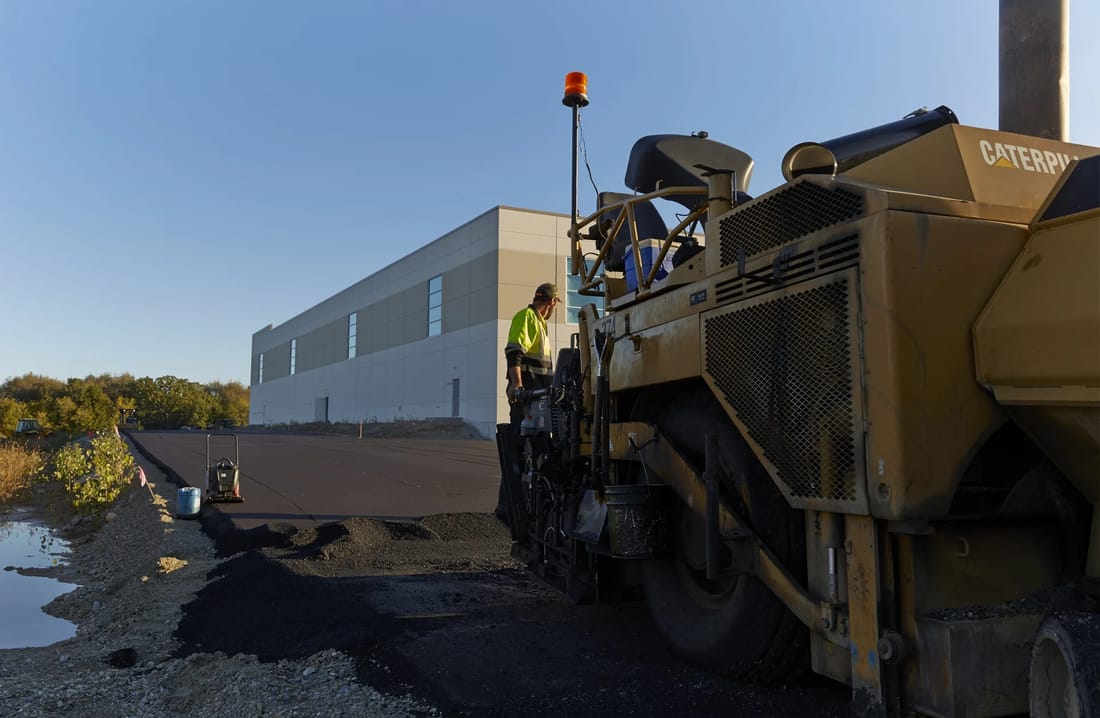
5. Asphalt placement. Depending on traffic and budget, we install a binder course and a separate top course or a single thicker lift for lower-traffic areas. Asphalt is delivered hot from plants that serve the Manchester region, then spread and compacted while temperatures are in the correct range to achieve density and proper bonding.
6. Striping and finishing. Once the mat has cooled, we add parking lines, ADA-compliant markings, directional arrows, and stop bars so your new surface is not only smooth but also organized and safe for visitors.
By structuring the conversion this way, we catch problems before they get buried and make sure your asphalt is built on a base that will not give way under New Hampshire conditions.
Design Options for Commercial Gravel-to-Asphalt Projects
Every commercial site has different demands, and a one-size-fits-all asphalt section is not the best approach. Precision Asphalt Manchester helps you choose the right options so you get strength where you need it and do not overspend where you do not.
For heavy use areas such as delivery lanes, dumpster pads, and freight docks, we typically recommend a thicker gravel base plus two asphalt lifts, often a stronger binder course topped with a smoother wearing course. For lighter duty employee parking or overflow lots, a thinner asphalt section on a well-compacted base may be enough to perform well and control costs.
We also plan drainage features specifically for Manchester’s rainfall patterns and snowmelt. This might include subtle cross slopes to existing catch basins, small swales along edges, or underdrain installations where we find persistent groundwater. Many gravel lots already have informal drainage paths. When we convert to asphalt, we either preserve those patterns in a controlled way or correct them so water no longer ponds and freezes.
If your property has tight maneuvering space, we look at turning radii and lane widths during design so trucks do not break down new pavement on the edges. We can adjust the layout of drive lanes and parking stalls during the conversion, and we regularly coordinate with property managers to time the work so tenants and customers can still access at least part of the site during construction.
For appearance, you can choose standard black commercial asphalt or, in some cases, specialty mixes suited for high visibility entrances. Although these aesthetic changes are secondary to structure, they can help a former dusty gravel lot match the rest of a professional campus or shopping center.
What Drives Cost in a Commercial Gravel-to-Asphalt Conversion
Property owners often assume that converting gravel to asphalt is simply a matter of square footage, but there are several practical factors that drive pricing. Precision Asphalt Manchester is upfront about these, because understanding them helps you plan and compare proposals fairly.
Existing base condition is usually the biggest variable. If your gravel lot has been well maintained, with enough depth and minimal mud, we may be able to reuse much of it with only minor reshaping and compaction. If the base is thin, mixed with fines or topsoil, or saturated, we need to remove and replace material, which adds labor, disposal, and new stone.
Access and staging area also matter. Lots that are easy to reach from Manchester’s main roads and that offer room to maneuver trucks and pavers are more efficient. Tight downtown or infill sites can require more handwork, smaller equipment, and more careful logistics, which affects cost.
Thickness and structure of the asphalt section are another key driver. A truck-intensive industrial lot will need more base gravel and thicker asphalt lifts than a medical office with mostly passenger vehicles. We will typically present at least two scenarios, for example a lower initial cost option and a heavier-duty option, so you can weigh upfront spend against expected lifespan.
Drainage upgrades and site corrections can add cost but often save money over time. Installing a small underdrain to fix a chronic soft spot or adjusting grades to eliminate ice-prone puddles can prevent rutting, potholes, and liability issues in winter.
Finally, project phasing and business continuity planning can influence price. If we need to pave in multiple small phases so a large plaza or facility can remain open with shifting parking, that requires more mobilizations and coordination than a single uninterrupted pour.
Common Problems With Gravel Lots and How Conversion Fixes Them
Most Manchester commercial gravel lots share a set of recurring problems, especially after a few winters. Precision Asphalt Manchester addresses those issues directly in our conversion work so they do not carry over into your new surface.
Ruts and washboarding form where vehicles follow the same paths and water runs along those tracks. When we convert to asphalt, we correct the underlying grades and compact the base evenly, so loads spread across the structure instead of cutting channels.
Dust is a constant complaint near retail entrances and office doors. Fine particles from your gravel spread onto sidewalks and into buildings. A properly sealed asphalt surface removes that dust source and creates cleaner, safer walking surfaces, which is especially appreciated at medical facilities and food service businesses.
Soft spots and muddy areas are typically caused by poor drainage or thin base over clay or fill. During the conversion, we identify those areas during probing and test pits, then undercut and rebuild them with clean, angular stone. In locations where groundwater is a repeated problem, we may recommend a simple underdrain tied to a suitable outlet.
Irregular parking and unclear traffic flow are also common on gravel. Without permanent markings, drivers tend to park haphazardly, which can reduce available capacity and block fire lanes. Once the asphalt is installed, we lay out a striping plan that maximizes stalls, clearly defines accessible spaces, and organizes vehicle movement so congestion is reduced.
For facilities that plow snow, gravel lots also lose material with every push. Over years, this thins the surface and increases your need for new stone. With asphalt, a correctly set plow blade can clear snow cleanly without hauling away your surface, which reduces your ongoing operating costs.
Why Work With a Local Manchester Asphalt Team
Commercial gravel-to-asphalt conversions benefit from local knowledge of weather, subsoils, and traffic patterns. Precision Asphalt Manchester works primarily in Manchester and surrounding New Hampshire communities, so our crews are familiar with the conditions that cause pavements here to fail and the details that keep them performing.
We plan our construction schedules around local weather windows so we place asphalt when ground and air temperatures support proper compaction and bonding. In late fall or early spring, that timing matters more than many people realize, especially for high traffic commercial sites.
Our team is also used to coordinating with the City of Manchester and nearby towns when drive entrances connect to public roads or when drainage changes might affect town infrastructure. If permits or inspections are required, we can help manage that process and sequence our work so you are not caught waiting with a half-finished lot.
Because we are local, we understand how snow removal contractors in this area operate and we design edges, transitions, and layouts with plows in mind. This includes creating snow storage areas, minimizing tight corners that are hard to clear, and reinforcing spots that will see repeated piling.
From the first site walk to the last stripe, you can speak directly with someone who has been on your property and understands your goals, whether that is improving curb appeal for tenants, reducing annual maintenance spend, or preparing a facility for heavier truck traffic. That combination of technical paving knowledge and familiarity with Manchester’s practical realities is at the heart of how we approach every commercial gravel-to-asphalt conversion.